On a $600,000 home, a 2% difference between what you net and what your neighbor nets is $12,000. That's real money. My average sale-to-list ratio in Snohomish County is 102.03% compared to the market average of 100.2%. That gap doesn't happen by accident. It's the result of a repeatable staging and pricing framework I've refined over 17 years in this market.
102.03%
That's Kim Pelham's average sale-to-list ratio in Snohomish County, versus the market average of 100.2%. On a $600,000 home, that's roughly an additional $10,980 in your pocket compared to the average seller. On a $750,000 home, the difference climbs to over $13,700.
Based on Kim Pelham's listings vs. Snohomish County MLS averages
Why Most Homes Leave Money on the Table
Most sellers don't lose money at the negotiating table. They lose it in the weeks before the home ever lists. Three mistakes account for almost every underperforming listing I've seen in Snohomish County.
Pricing Too High to “Leave Room to Negotiate”
This is the most common and most costly mistake. When a home is priced 3 to 5% above market, it doesn't attract serious buyers during the critical launch window. Showings drop off. Days on market accumulate. And once a listing has been sitting for three weeks, buyers start wondering what's wrong with it. The home that could have sold in a bidding war on week one ends up selling for less than list price three months later.
Skipping Staging Because It Feels Unnecessary
Sellers who live in their home often can't see it the way a buyer will. Their furniture arrangement is logical for how they live. Their personal items feel comfortable and normal. But buyers are trying to imagine their own life in the space, and clutter, personal photos, and awkward furniture layouts make that very hard to do. A buyer who can't picture themselves in a home moves on to the next one.
Photos That Don't Do the Work
Before a buyer ever walks through your front door, they've already decided whether your home is worth their time. That decision is made entirely from your listing photos. Dark, cluttered, or poorly composed images filter out buyers who would have loved the home in person. Staging and photography work together. A beautifully staged home photographed well is a completely different product than the same home photographed as-is.
Staging Psychology 101
Research on buyer behavior consistently shows that people form their initial impression of a home within 90 seconds of walking in. Not 90 minutes. 90 seconds. Everything that happens after that first impression is either confirmation or justification, but the emotional verdict has already been reached.
This matters because buying a home is an emotional decision that buyers then rationalize with logic. When a buyer walks into a well-staged home, they're not thinking about square footage and price per foot. They're feeling something. They're picturing Sunday mornings in the kitchen and reading in that sunny corner. That emotional response is what drives competitive offers.
Staging creates that response by removing distractions and highlighting what a home does best. A small living room feels larger when the furniture is right-sized and arranged to open the floor plan. A dated kitchen feels fresh when the counters are clear and the right accessories are in place. You're not hiding anything. You're presenting the home the way it deserves to be seen.
The Three-Phase Staging Framework
I stage every listing myself. I don't outsource it to a third party and hand over a bill. This is something I do personally because I've found it produces better results and because I know this market intimately. Here's how the process works.
Phase 1: Declutter and Neutralize
Before we add anything, we remove. Personal photos come down. Collections get packed away. Countertops get cleared. Closets get thinned out so they feel spacious rather than stuffed. We paint over bold accent walls with neutral tones that photograph well and appeal to the widest range of buyers. The goal of this phase is to create a clean, neutral canvas where buyers can project their own life onto the space.
This phase is the least glamorous and the most important. A home that's cluttered and personalized is working against itself, no matter how nice the furniture is.
Phase 2: Edit the Furniture Layout
Furniture placement is one of the most underestimated tools in staging. Most people arrange furniture against the walls, which actually makes a room feel smaller. Pulling furniture off the walls, creating conversational groupings, and establishing clear traffic flow makes a room feel both larger and more purposeful.
In this phase, we also evaluate scale. Oversized furniture in a modest space makes it feel cramped. We move or remove pieces that are fighting the room and keep what helps it breathe. Sometimes this means renting a storage unit for a month. It's worth it.
Phase 3: Style the Key Spaces
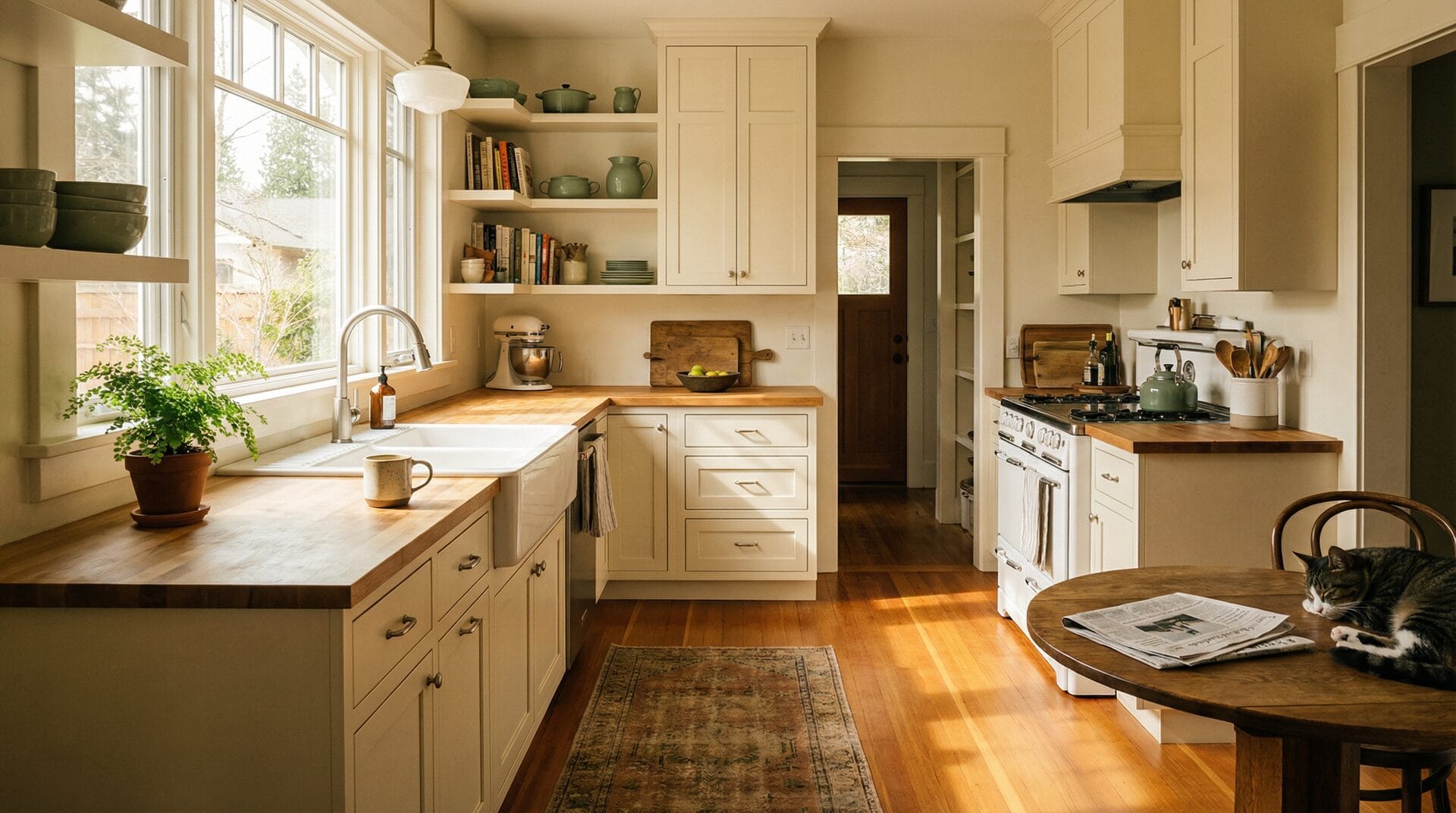
The kitchen, primary bedroom, and living room carry the most emotional weight in any home sale. These are the spaces buyers linger in. We style these intentionally. Fresh flowers or a simple bowl of lemons on the kitchen counter. Layered bedding with coordinating pillows in the primary bedroom. A throw blanket and a few books in the living room. These touches are small in cost and significant in effect.
We also address light. Dark rooms feel smaller and less inviting. We maximize natural light where possible, add lamps where needed, and make sure every fixture has working bulbs at the right color temperature. Light makes a home feel clean, open, and alive.
What Staging Actually Costs in Snohomish County
One of the first questions sellers ask me is how much staging will cost. Here's what the numbers actually look like in this market.
Consultation only: $200 to $400. A stager walks through your home and gives you a detailed room-by-room action plan. You do the work yourself. This is a strong option for sellers who are handy and motivated.
Occupied staging: $500 to $2,000. The stager works with your existing furniture and brings in accent pieces, art, and accessories to complete the look. This is the most common approach for sellers who are still living in the home.
Vacant staging: $2,000 to $5,000 and up, depending on home size. When a home is empty, staging becomes essential. Vacant homes feel cold, small, and hard to picture. Furniture rental for a 30 to 60-day listing window is a genuine investment that pays for itself in a well-executed sale.
The ROI math is straightforward. On a $550,000 home, the difference between my average 102.03% sale-to-list ratio and the market's 100.2% is about $10,000. A $1,500 staging investment that contributes even a portion of that gap isn't a cost. It's a multiplier.
“Staging isn't about making a home look like a showroom. It's about removing everything that gets in the way of a buyer falling in love. The price gets you in the door. Staging is what closes the gap between asking and selling.”
Kim Pelham, Real Estate Broker, The Pelham Group NW
The Pricing Formula
Here's something most sellers don't fully understand: the list price is not your target. It's the starting point for creating competition. The goal of strategic pricing is to attract enough qualified buyers simultaneously that they start bidding against each other. That competition is what drives your final price above asking.
When I price a home, I'm not looking at the list price of similar homes in the neighborhood. I'm looking at what those homes actually closed for, within the last 60 to 90 days, factoring in condition, lot, updates, and proximity. Then I position the home at or just below that number to maximize the buyer pool in the launch window.
A buyer searching online with a $650,000 ceiling sees every home listed at $649,900 or below. A home listed at $655,000 misses that entire buyer pool. These pricing thresholds are real, and most buyers search in round-number increments. Pricing strategically within those thresholds can double your showing traffic.
When multiple buyers tour a well-staged, accurately priced home in the same week, something shifts. They know others are looking. They feel urgency. Escalation clauses appear. Contingencies get waived. This is how homes sell above asking, not by listing high but by creating the conditions where buyers compete to win.
Case Study: 69 Days Listed. Sold in 3 Days.
A seller came to me after their home had been sitting on the market for 69 days with another broker. No offers. A price reduction. Growing frustration. The house wasn't the problem. The presentation was.
When I walked through, I saw a home with real potential that had been listed with personal clutter in every room, furniture pushed against the walls, and listing photos that did none of it justice. The price had been cut once, which only signaled to buyers that something was wrong.
We relisted. I staged the home myself, rearranging furniture, clearing the clutter, styling the key spaces. New professional photography. Repriced based on a fresh comp analysis to recapture the right buyer pool. Back on the market with a clear, compelling listing.
It sold in three days. For $5,000 more than the previous asking price. The home hadn't changed. The way it was presented had.
That's not a lucky outcome. It's what happens when staging and pricing work together the way they're supposed to.
common questions
Frequently Asked Questions
How much does home staging cost in Snohomish County?
For occupied homes, a staging consultation runs $200 to $400. Full occupied staging, where a stager works with your existing furniture and brings in accent pieces, ranges from $500 to $2,000 depending on home size. That investment consistently returns several times its cost in a well-executed sale.
Does staging help sell a home faster in Snohomish County?
Yes, consistently. Staged homes create an emotional response in buyers that unstaged homes can't match. When buyers can picture themselves living in a space, they decide faster and offer more confidently. The case study above is a clear example: 69 days with no staging, sold in 3 days after staging.
What is a good sale-to-list ratio in Snohomish County?
The market average in Snohomish County sits around 100.2%. Any ratio above 101% means the home sold above asking, which reflects strong demand and competitive offers. At 102.03%, Kim Pelham's listings consistently outperform the market average by a meaningful margin.
How does strategic pricing lead to a higher final sale price?
Pricing at or slightly below market value draws in more buyers during the launch window. More buyers means more showings. More showings means competing offers. Competing offers is where sellers gain real negotiating leverage, not just on price but on terms. Overpriced homes see fewer showings, accumulate days on market, and usually end up selling below what they could have gotten with a sharper launch.
Does every home need full staging before selling?
Not every home needs the same level of investment. Some homes in excellent condition with neutral finishes need minimal staging. Others need more work. When we meet to talk about your home, I'll walk through it with you and give you an honest assessment of what will actually move the needle versus what isn't worth your time or money.
Related Articles
Not Every Home Needs Full Staging. Let's Talk About Yours.
I'll walk through your home, tell you exactly what will move the needle, and build a pricing strategy around your specific situation. No fluff, no pressure. Just an honest conversation about what your home is worth and how to get there.
Start a Conversation