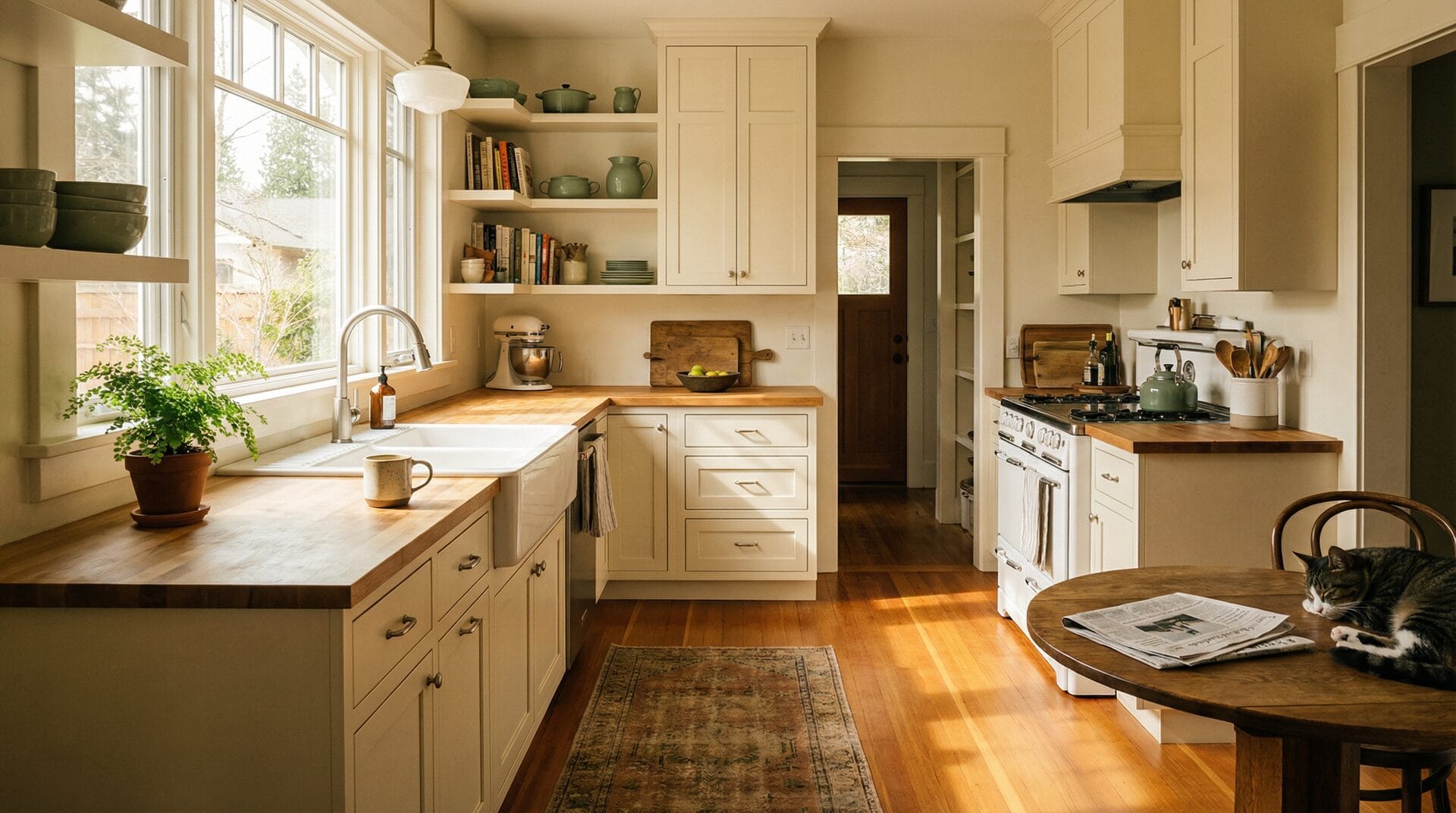
Staging beats a price cut. Almost every time. Here's the data.
I have been selling homes in Snohomish County for years. I have watched sellers make this mistake over and over: their home sits for a few weeks, they get nervous, and they cut the price. Sometimes $10,000. Sometimes $25,000. And they do it before they have ever seriously addressed the real problem, which is almost always presentation, not pricing.
My average sale-to-list ratio is 102.03%. That means my clients sell for more than they ask. That number is not an accident. It is the result of doing the work before the listing goes live, and staging is a significant part of that work.
102.03% vs 100.2%
Kim Pelham's average sale-to-list ratio vs the NWMLS Snohomish County market average. On a $600,000 home, that 1.83% gap is $10,980 in your pocket.
The market average means most sellers are leaving money on the table. Staging is one of the clearest reasons my numbers look different.
Source: NWMLS Snohomish County market data
The “Price to Win” Myth
There is a belief among some sellers that dropping the price is the most reliable lever they can pull. It feels logical. Lower the number, attract more buyers, sell faster. The problem is the math does not support it.
A 3% price reduction on a $600,000 home is $18,000. Gone. Permanently surrendered before a single showing happens under the new strategy.
Professional staging for that same home? A consultation runs $200 to $400. Hands-on implementation for an occupied home typically lands between $500 and $2,000 depending on what it needs. Call it $1,500 on the high end for a mid-size Snohomish County home. That is $16,500 less than the price cut you were considering. And if staging works as it consistently does, you do not just save the $18,000. You may actually sell above asking and gain even more.
The instinct to cut price comes from fear. I understand it. When your home has been sitting, the anxiety is real. But a price cut does not solve a presentation problem. It discounts a product that buyers still do not want at the lower number. Staging solves the actual problem.
What Buyers Actually React To
Buyers do not buy homes the way they think they buy homes. They believe they are making a rational financial decision. They are actually making an emotional one that they rationalize afterward.
Neuroscience research confirms this. The human brain forms a first impression of a space in roughly 90 seconds, and the limbic system, which governs emotion and memory, fires before the prefrontal cortex gets a chance to analyze. By the time a buyer is consciously thinking about price per square foot, their gut has already decided whether this is home.
Staged homes trigger that emotional response. They feel livable. They feel aspirational. They let buyers picture their furniture, their kids, their mornings in that kitchen. An unstaged home full of the seller's personal belongings, mismatched furniture, and years of accumulated clutter does the opposite. It keeps buyers at arm's length, evaluating rather than connecting.
Buyers who connect emotionally will compete for a home. They will waive contingencies, stretch their budgets, and write personal letters. Buyers who are only evaluating will make low offers or walk away. Price does not change that dynamic. Presentation does.
The Real ROI of Staging
The National Association of Realtors reports that 81% of buyer's brokers say staging helps buyers visualize a property as their future home. That is not a small number. That is four out of five professionals who work directly with buyers saying that presentation changes the outcome.
Staged homes also sell significantly faster. Multiple industry studies put that figure at 30 to 73% faster than comparable unstaged properties. Speed matters in real estate. A home that goes under contract quickly attracts better terms, stronger buyers, and less negotiating pressure. A home that sits accumulates stigma.
My own numbers bear this out. My clients average 102.03% of list price. The NWMLS Snohomish County market average is 100.2%. That gap is not explained entirely by staging, but staging is a consistent part of how I get there. It is not the only variable. It is a reliable one.
“Buyers will pay more for a feeling they cannot quite name. Staging creates that feeling. A price cut cannot.”
Kim Pelham, Real Estate Broker, The Pelham Group NW
When a Price Cut Is the Right Answer
I am not going to pretend staging solves everything. It does not.
If a home has been correctly staged, professionally photographed, and actively marketed for four or more weeks with strong showing activity but zero offers, the price is wrong. Full stop. Good showings with no offers is a pricing signal that cannot be ignored. The buyers are interested enough to come. They are not interested enough to buy. That gap is almost always price.
Lack of showings at all is also often a pricing problem, though sometimes it is a marketing problem. That diagnosis matters. If buyers are not even coming through the door, we need to understand why before we decide what lever to pull.
The sequence matters enormously. Stage first. Price accurately. Market with real investment. If the home has been on market four-plus weeks with all of that in place and strong showing traffic but no offers, then we talk about price. But you have to do the staging work first, or a price cut is just a discount on a product buyers still do not want.
The Snohomish County Staging Formula
I stage homes myself. That is not how most brokers operate, but it is how I do it because I believe it produces better results and because I want to control the quality of what goes on the market under my name.
Here is how the process works in practice:
Phase 1: Consultation ($200 to $400)
We walk the home together. I identify what stays, what goes, what needs to move, and what small repairs or cosmetic updates will deliver outsized return. This is where we make the plan. Some sellers can execute it themselves. Others need hands-on help.
Phase 2: Implementation ($500 to $2,000)
For occupied homes, implementation typically means rearranging and editing what is already there. Decluttering, depersonalizing, improving furniture arrangement, adding targeted accessories where needed. We are not renting furniture for an empty house. We are using what the seller has more strategically. The goal is a home that looks like a showroom without feeling sterile.
The expected price lift relative to cost is the best return on investment available in a home sale. A $1,500 staging investment on a $600,000 home that produces even a 1% improvement in final sale price returns $6,000. That is a 4x return before we even consider the faster sale timeline.
Case Study: The Home That Sat 69 Days
This is a real story.
A home in Snohomish County came to me after its listing expired. It had been on the market for 69 days with another broker. No offers. The sellers were frustrated, demoralized, and convinced the market was against them. They had already dropped the price twice.
I walked through the home and the problem was immediately clear. It was not the price. The home was lived-in in a way that made it hard for buyers to see past the current occupants. Personal items everywhere. Furniture that blocked the natural flow of rooms. A living room that felt smaller than it was because of how it was arranged. A kitchen that felt cluttered.
We staged it. We relisted at a price $5,000 higher than the canceled listing. The home sold in three days.
Same home. Same neighborhood. Same market. Different presentation. That is not a fluke. That is what staging does when the underlying property has real value that was being obscured by how it was shown.
common questions
Frequently Asked Questions
Does staging really help sell a home for more money?
Yes. Staged homes in Snohomish County sell for a higher percentage of asking price than non-staged homes. Kim Pelham's average sale-to-list ratio is 102.03% vs 100.2% for the NWMLS market. The difference on a $600,000 home is over $10,000.
Is it better to lower my price or stage my home before selling?
Almost always stage first. A 3% price reduction on a $600,000 home costs $18,000. Professional staging costs $500 to $2,000. The math strongly favors staging. Lower the price only if the home is correctly staged and has sat on the market for 4+ weeks with strong showing traffic but no offers.
What is the ROI of home staging?
The National Association of Realtors reports that 81% of buyer brokers say staging helps buyers visualize a home as theirs. Staged homes sell 30 to 50% faster and consistently command higher final prices. Kim's 102.03% sale-to-list ratio reflects this in her actual client results.
How much does home staging cost in Snohomish County?
A staging consultation runs $200 to $400. Hands-on staging implementation for an occupied home typically costs $500 to $2,000 depending on size. Kim stages homes herself and includes staging in her selling strategy, so many clients do not pay separately for staging implementation.
When should I lower my home's price instead of staging it?
Lower the price when the home has been correctly staged, professionally photographed, and actively marketed for 4+ weeks with strong showing traffic but zero offers. Lack of showings is usually a pricing problem. Showings with no offers can also be a pricing problem. Kim will diagnose the real issue honestly.
Related Articles
Pricing is important. Staging is the multiplier.
Let's talk about what your home needs before it hits the market. No pressure, just an honest conversation about what the data says.
Let's Talk